Quality Glass Containers
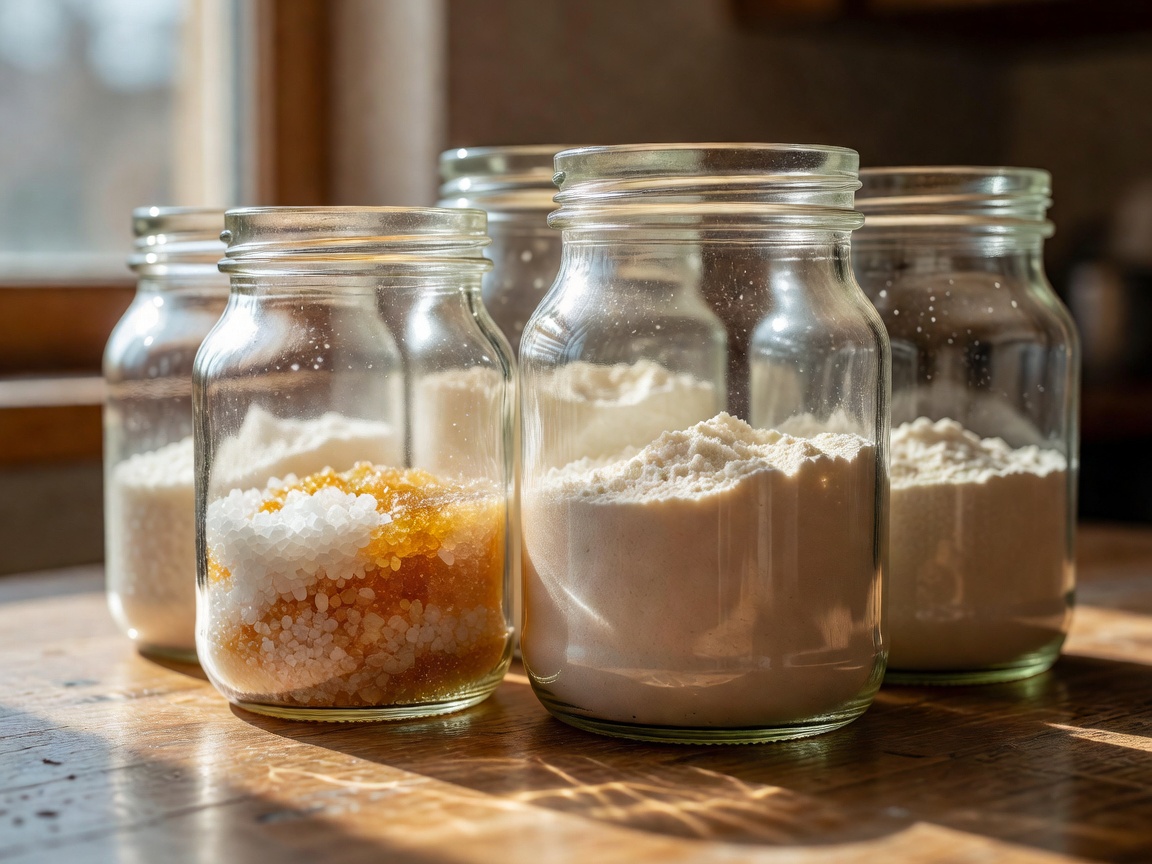
The ubiquitous glass jar, frequently discarded once its original contents are consumed, represents one of the most mechanically perfect and chemically inert storage solutions available in domestic logistics. Discarding a high-quality, thick-walled glass container is a failure to recognize its immense secondary utility. Unlike polymers and plastics, glass does not degrade, scratch easily, or leach endocrine-disrupting chemicals into its contents over time.
Glass vs. Plastic Degradation
Plastics—even those labeled as BPA-free or food-safe—are inherently porous at a microscopic level. They absorb oils, retain odors, and suffer from structural fatigue when subjected to thermal cycling (such as running through a dishwasher). Over time, UV light and heat cause plastics to become brittle and micro-fissures to develop, rendering them unhygienic for food storage.
Glass, conversely, is non-porous. A glass jar that previously held highly acidic tomato sauce or pungent aromatics can be returned to a state of absolute neutrality through standard sterilization. It provides an impermeable barrier against oxygen and moisture, essential criteria for archiving sensitive organic or chemical materials.
Material Specifications: Borosilicate vs. Soda-Lime
Not all glass is created equal, and understanding the composition of your containers dictates their safe reuse parameters.
- Soda-Lime Glass: This constitutes roughly 90% of manufactured glass, including standard food packaging (jam jars, pickle jars, beverage bottles). While chemically inert and excellent for dry or refrigerated storage, soda-lime glass is susceptible to thermal shock. Pouring boiling water into a cold soda-lime jar will likely result in catastrophic structural failure (shattering).
- Borosilicate Glass: Recognized by brand names such as Pyrex (specifically vintage or laboratory-grade models), borosilicate includes boron trioxide, which lowers its coefficient of thermal expansion. These containers can transition from freezing temperatures to high heat without cracking. They are the premium standard for heat-intensive sterilization and processing.
The Sterilization Process
To prepare a commercial glass jar for permanent archival use, the initial label and adhesive must be entirely removed. Mechanical scraping is often insufficient and risks scoring the glass. An application of a solvent (such as isopropyl alcohol or a dedicated adhesive remover), followed by a hot water and heavy-alkali soak, will dissolve commercial glues. Once clean, the jar should be sterilized via boiling or high-heat dishwashing to neutralize any residual organic compounds.
Structural Applications
The utility of a retained glass jar extends far beyond the pantry. From an organizational standpoint, uniform glass jars provide immediate visual inventory of their contents. They are optimal for:
- Hardware sorting: Protecting high-carbon steel screws and brass fittings from atmospheric moisture, preventing rust and oxidization.
- Chemical curing and mixing: Serving as non-reactive vessels for mixing epoxies, paints, or solvents that would otherwise melt plastic containers.
- Long-term desiccant storage: Holding silica gel reserves in an airtight environment until they are needed to control humidity in document or electronics archives.
The only components of a glass jar assembly prone to failure are the lids. Commercial plastisol-lined lids may eventually rust or lose their sealing integrity. However, the glass vessel itself remains structurally sound indefinitely. Never throw away a thick-walled glass jar; it is an organizational asset of permanent value.