Hardware & Fasteners
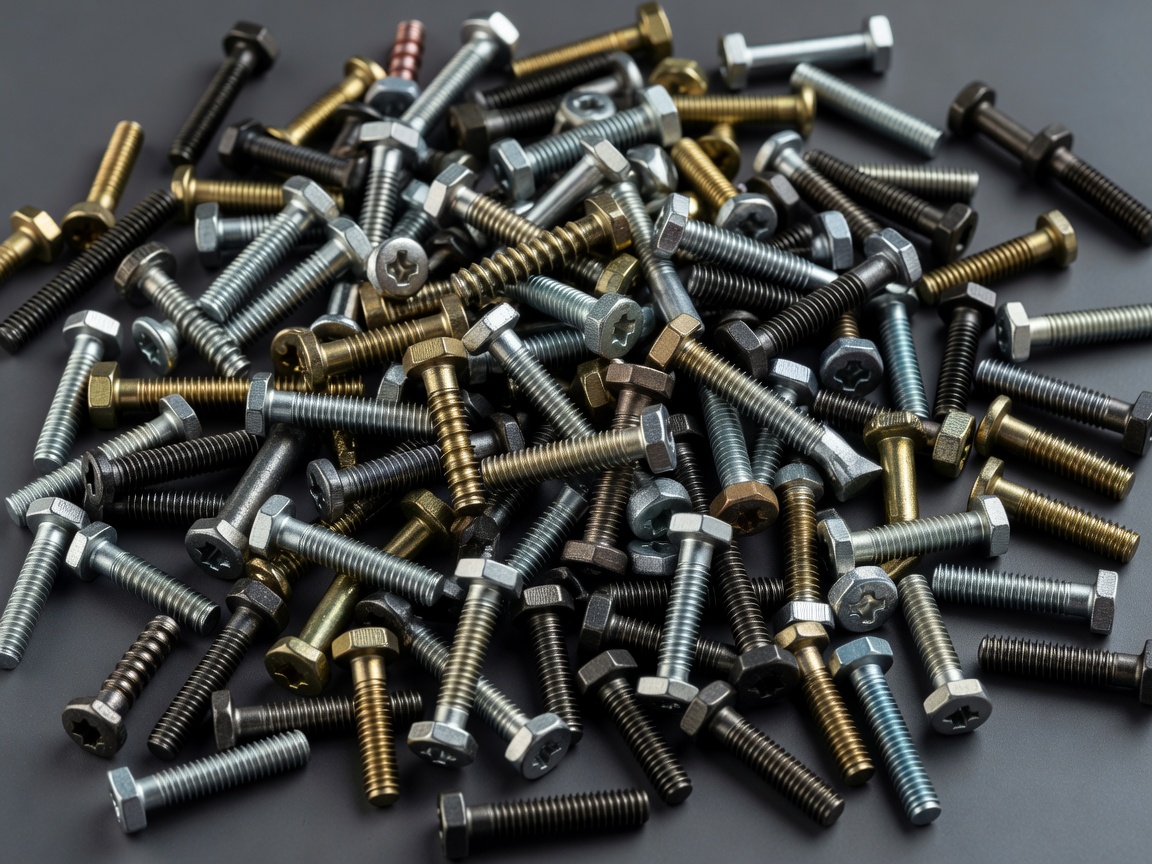
During the disposal of broken furniture, discarded appliances, or obsolete mechanical equipment, a critical error is frequently made: the failure to salvage the hardware. Fasteners—screws, bolts, hinges, brackets, and washers—are engineering components that possess distinct metallurgical properties. Modern, mass-produced fasteners found in big-box retail environments have suffered a sharp decline in manufacturing standards, prioritizing cost reduction over tensile strength. Retaining quality hardware is an imperative structural strategy.
The Decline of Modern Metallurgy
To understand why vintage or industrial fasteners must be preserved, one must analyze the modern alternative. Contemporary retail screws are often manufactured from low-carbon steel alloys, frequently bulk-plated in zinc. They possess low shear strength and are highly prone to "cam-out"—the process by which a screwdriver slips and strips the head of the screw, rendering it useless and impossible to extract.
By contrast, hardware salvaged from mid-century furniture, industrial machinery, or high-end electronics is frequently fabricated from superior alloys. Solid brass, hardened high-carbon steel, and marine-grade stainless steel exhibit exceptional durability, resistance to oxidation, and torsional stability. Throwing these items away and replacing them later with inferior pot-metal equivalents compromises the structural integrity of future repair projects.
Identification and Classification
Building a usable archive of fasteners requires basic identification skills to determine whether an item warrants retention.
- Solid Brass vs. Brass-Plated: True brass is non-magnetic. Testing a piece of hardware with a rare-earth magnet instantly reveals its composition. If the magnet sticks, it is steel plated with a micro-layer of brass. Solid brass is highly desirable for woodworking, decorative fixtures, and applications requiring resistance to atmospheric corrosion.
- Stainless Steel: Highly valuable for plumbing repairs, outdoor applications, or environments subjected to caustic chemicals. Like brass, certain grades of stainless steel exhibit low or no magnetic reactivity.
- Hardened Steel Bolts: Often identifiable by radial lines or numbers stamped on the head, indicating their specific grade and tensile strength. High-grade bolts should never be discarded, as their replacement cost is significant.
Systematic Archiving of Small Parts
A disorganized pile of screws is not an archive; it is debris. To extract value from salvaged hardware, it must be systematically categorized. The retention of small parts demands a modular storage approach. Glass jars (as detailed in our Containment guide) or compartmentalized organizing trays provide the necessary isolation.
| Category | Examples | Primary Application for Reuse |
|---|---|---|
| Wood Screws | Flat head, pan head (brass/steel) | Furniture repair, cabinetry, structural joining. |
| Machine Screws | Hex bolts, socket cap screws | Appliance repair, automotive fixes, metalworking. |
| Washers & Spacers | Lock washers, nylon standoffs | Distributing load pressure, electrical isolation. |
| Hinges & Brackets | Butt hinges, L-brackets | Door reinforcement, shelving stability, framing. |
Before storing salvaged hardware, ensure it is free from active corrosion. A light application of machine oil or WD-40 prior to sealed storage prevents atmospheric moisture from initiating the oxidation process. The few minutes required to extract, evaluate, and categorize a hardened steel bolt will pay dividends when a critical structural repair demands components that will not fail under load.